These Fashion Houses Are Taking Sustainability Seriously

Sustainability is the hottest buzzword in fashion right now. Let’s be fair, it’s not easy for an industry built around wide-eyed escapism to face up to the sometimes grim reality of its own world – but it is happening.

The collapse of the garment factory Rana Plaza in Bangladesh in 2013 and the release of The True Cost, an exposé fashion documentary aired in 2015 and directed by Andrew Morgan, sent a shockwave through the system. Add to this, the fashion industry is the second largest polluter, second to oil. Cue customers starting a conversation with: ‘Can the fashion industry really change?’

The who, what, where and when has followed as consumers (especially millennials) become more conscious about their purchases and, in turn, demand change.
GETTY

At the tail end of 2016, according to the McKinsey Global Fashion Index, fashion was worth an estimated $2.4 trillion. So it comes as no surprise the apparel industry accounts for ten percent of all global carbon emissions, the primary human cause of global warming.

And it’s making fabric that comes at a cost to the climate. Year after year, around 70 million trees are used to make fabrics like rayon, viscose, modal and lyocell. Have you checked your clothing label lately? It’s there in black and white. And it doesn’t stop there. It’s been estimated over a billion animals a year are killed for their leather and 50 million for their fur.

But trade associations, luxury groups, educational institutions and non-profits are making way for change. Glasgow Caledonian University’s Fair Fashion Center is a pioneer in its own right. Working with around 30 CEOs and 211 brands – a mixture of luxury conglomerates and massive retail and distribution companies – that are collectively responsible for $200 billion in business.

But most of the brands, for now, have decided to keep their good work away from the public eye. However, François-Henri Pinault, chairman and CEO of Kering, whose luxury labels include Saint Laurent, Alexander McQueen and Gucci, isn’t shying away from discussing the subject matter and changes that need to be made.
GETTY

And then there’s Stella McCartney. She’s is an inspiration for her sustainability model – and also part of the Kering Group. Working with NGO Canopy, she’s ensured (since she started her label) that fabric production meets strict sustainability standards.

Sourcing everything from a certified forest in Sweden, with the extraction process happening in other certified mills around Europe, the impact of transportation is reduced. At the annual talk held at the London College of Fashion in November last year, she said: “Fashion is getting away with murder – it needs to be answerable and more questions need to be asked.” And she’s right. She’s living proof it’s achievable. Fifty-three percent of her entire womenswear collections and 45 percent of her menswear is sustainable.

Fast fashion is the killer. People dispose of clothes after only a few wears without giving it a second thought. According to the Environmental Protection Agency, the fashion business is responsible for 85 percent of all textiles that make their way to landfills – around 21 billion tonnes.

That’s why the high street brands are stepping up to the plate, like H&M’s take-back, where customers bring back their old clothes in exchange for a discount on a new purchase. Since 2013, they’ve collected around 30,000 metric tons of old clothes, giving them to charity shops or using them as fibre material for insulation.

Last year, fast fashion giant Zara launched Join Life (in a similar standing to H&M’s Conscious Collection in 2011) using organic cotton, recycled wool and Tencel. Meanwhile, Topshop’s Reclaim range is a capsule collection made up of 20 pieces created from existing stock of jersey, cotton and denim off-cuts.
GETTY

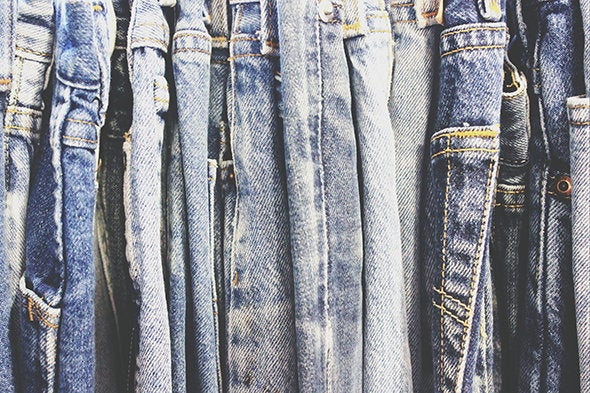
They say a good pair of jeans can last you a lifetime, which is why Levis’s Water<Less jeans process has been met with considerable acclaim. By removing the water from stone washing, the company estimates the changes cut water usage by up to 96 percent for some styles.

And finally, this year should also see the appearance of the Higg Index. This apparel and footwear self-assessment collection is working on a standardised supply chain measurement tool so garment tags can educate shoppers about their purchases’ social and environmental effects.

It is looking good for sustainable fashion.
Upcycling And The Circular Economy

Our world is naturally circular. Earth’s ecosystems, when left alone, are self-sustaining. Most living things have a symbiotic relationship with the planet, giving as much as they take. One example of this is photosynthesis, in which plants convert carbon dioxide and water into energy, releasing a waste product that is essential for life on Earth: oxygen. The planet doesn’t need to attend conferences or adopt resolutions on sustainable practices. Perfect resource management happens naturally.

It’s no secret that things get out of whack when humans get involved. We want to be the masters of the planet, to control it and bend it to our will. 100+ years of industry and commerce have shown that we can get rich trying, but our activities are having a clear impact on the health of our world. Let me be clear here: I do not think we will completely destroy the planet. Humans are a small blip in the 4.5-billion-year (and growing) lifespan of Earth. But we are altering the state of our planet to such a degree that our own survival is threatened. To quote Michael Crichton from the prologue to Jurassic Park, “the earth would survive our folly, only we would not.”

Our current economic system is linear, which means we take, make, use, and dispose. Our planet offers finite resources, so this practice is clearly unsustainable. To serve the needs of both people and the planet, our human-created systems need to be aligned with the natural rhythms and processes of Earth. And we don’t need to live in huts, without electricity or running water, to do so. We don’t need to give up our creature comforts. I believe we can have our cake and eat it, too, by adopting a global circular economic system.

Circular economics, as defined by the Ellen MacArthur Foundation, is “one that is restorative and regenerative by design, and which aims to keep products, components and materials at their highest utility and value at all times, distinguishing between technical and biological cycles.” Within this system, waste does not exist. Or to put it another way, one company’s waste is another company’s resource. It makes no sense – environmentally or financially – to throw away resources.

In environmental circles, there currently is a focus on dealing with post-consumer waste, which is time-consuming and expensive. We also need solutions that we can apply earlier in the process, before products even reach consumers. In traditional clothing manufacturing and according to the Upmade waste analysis of Beximco, 18% of the materials that enter the manufacturing process are leftover at the end. And most of it ends up in landfills. For my own brand – Reet Aus – we use existing materials as much as possible. Upcycling is one of the easiest methods to apply within the circular economy. It doesn’t require big financial investments, as it is a matter of smart design and reorganising production. I don’t deny that when recycling textiles, it can be difficult to maintain and ensure quality. But if you take my brand as a case study, it can be done! In addition to keeping leftover textiles out of landfills, my method of upcycling saves an average of 75% water, 88% energy and creates 80% less CO2 (compared to products made from virgin materials).

2017-04-10-1491824499-9068381-ReetAus_2_A4_height.jpg
photo by: Dmitri Gerasimov

More than “just” healing our planet and making sure that future generations have a home, there is a strong financial case for the circular economy. The global financial institution ING produced a report in 2015 called ‘Rethinking finance in a circular economy‘. In their view, “the circular economy is the ultimate answer to solving the problem of the depletion and economic scarcity of resources.” It also makes good business sense. (I won’t go into detail here, so do check out the report.)

In order for there to be a global shift toward a circular economy, major corporations need to get on board. Yet companies resist this kind of change, even when it’s good for the planet and sometimes even when it is good for the wallet. I’m not an economist, but I advocate for a change in tax policies to encourage industrial upcycling. Unfortunately we cannot rely on companies to make the necessary changes out of the goodness of their hearts, so providing real, positive incentives seems like the logical way to push the world toward a sustainable, circular economy.

This is the second article in a series about sustainability, upcycling and design in the work of Reet Aus.

What Are Our Shopping Habits Really Doing To Our Planet? Now We Know

Pulse of Fashion Industry report outlines the environmental impacts of
fast fashion. 

Fashion is the second most polluting industry in the world. Since you’re reading this article, I’m sure that statement is familiar. But while it might shock, it doesn’t do anything to explain why. And if we don’t understand why the industry is so polluting, it makes it very difficult to understand how we could begin to change things.How much do you know about how a piece of clothing is made? Here’s a simple breakdown:

2017-05-09-1494319329-6429830-howclothingismade.jpg
Lifecycle of a garment, own image
This week, The Global Fashion Agenda and Boston Consulting Group released a report clearly and simply setting out the ways in which our addiction to fast fashion is affecting the environment and global society.

It’s pretty hard hitting – if you have a spare morning, enjoy bar charts, graphs and a healthy dose of statistics, I’d recommend a read. But I’m guessing you’re a little short on time and would really appreciate a summary – and a helpful one.

So I’m going to give it a shot.

Planetary Boundaries: what are they and why should I care?
A Planetary Boundary is a boundary ‘within which humanity can continue to develop and thrive for generations to come.’

There are four key boundaries to consider in the case of fashion: water consumption, energy emissions, chemical usage and waste creation.

And our actions until this point in all aspects of life have meant that we have exceeded all but one of these boundaries. Our incessant buying of fashion is an overwhelming contribution to this.

But don’t panic.

While the current situation should shock anyone, there are particular elements that we as consumers could have a disproportionately positive effect on, should we choose to do so.

And really, we have to. Because if we don’t choose to now, we will be forced to later.

Your ultimate guide to buying better clothes
Water
Whereabouts in the clothing supply chain do we use so much water?

Mainly in the raw materials phase, in particular in the growing of cotton. However, water is also used in the processing stages (dying, cleaning etc) and again, in considerable volumes, when we wash our clothes.

How can your choices help change things?

  • Think twice before washing your clothes – try airing them for a while first.

What/where to buy when needed:

Look for organic cotton wardrobe basics from The White T-Shirt Company or People Tree.

Energy
Whereabouts in the clothing supply chain do we use a lot of energy and why?

In the raw material phase (use of oil in the production of polyester for example), and the processing stage (all the mechanical equipment being operated). But again, it is highly significant in the usage stage in the way we choose to care for our garments by washing, drying and ironing.

What simple things can you do today that would be better?

  • Again, don’t wash your clothes so often, and when you do, wash at a lower temperature (they’ll still be clean!).
  • Choose to air-dry your clothes when you can (this will also affect how long they may last, as mechanical drying affects quality).

What/where to buy when needed:

Go for a brand that uses recycled materials (thereby reducing energy consumption as they don’t require virgin fibre). Brands like Ecoalf and Patagonia are leaders in this field and produce functional, good-looking clothing. Brands like Reformation and the smaller Starch Slides use fabrics that are destined to go to waste to make something new and, consequently, very limited in quantity.

Chemicals
Whereabouts in the clothing supply chain do we use a lot of chemicals and why?

Mainly in the growing of raw materials and, in particular, cotton. Fertilisers and pesticides are used in the growing of conventional cotton and run off into the waterways, harming communities and environments. The processing phase (dying in particular) can also be listed here, as lack of water treatment (releasing water into the environment when still full of chemicals) has the same effect. And once again, our usage; chemicals in detergents and micro-plastics are released through washing.

What changes can I make today?

  • By choosing to buy clothing made from recycled fibres or organic cotton (that prohibits the use of any chemicals), you are sending a signal to brands that you want more environmentally friendly fibres in your clothes.

What/where to buy when needed:

Go for a brand that you know is dedicated to the triple bottom line of People, Planet and Profit. Companies like Veja and Finisterre hone in on all parts of their supply chains. Smaller brands like Eight Hour Studio use exclusively organic cotton and Seeker x Retriever use only natural dyes.

Waste
Whereabouts in the clothing supply chain do we produce a lot of waste and why?

This part is overwhelmingly to do with us, the consumers, more than any other factor. By buying too many cheap clothes and throwing them away, we, more than anyone else in the supply chain, are contributing massively to this problem. Only 20% of clothing produced today is reused or recycled in some way. There are others involved too of course. Brands that churn out cheap, disposable clothing that cannot be recycled at the end of its life, are also guilty of waste.

What can I do today?

  • Don’t buy into fashion trends so readily and only buy things that you really need.
  • If you do need to buy something, only buy it if it suits you and you are comfortable wearing it (really think about how may times you will realistically wear it too).
  • Make sure it is versatile (goes with lots of things you already have) and is good quality so it will stand the test of time.
  • Look after the clothes you have so that they last longer; don’t over wash them and try to repair instead of replace them.
  • Buy second hand.
  • Donate clothes (that are in good condition) that you no longer want, or give them to someone you know would like them.

What/where to buy if needed:

Think about your personal style and invest in simple pieces that are not trend lead, but rather the building blocks of your wardrobe. For me, these are pieces from Kowtow, The White T-shirt Company, Veja and Levi’s for example. Invest in items made for you and that can be tailored to your preferences (Veryan), or something made from recycled or biodegradable fibres (Freitag).


Activism never looked so good
The report unearthed an additional insight worth mentioning, that only goes further to support the need for action on our side.

It revealed that ‘a third of Millennials strongly agree that they are more likely to buy from companies that are mindful of their social responsibilities’, but that ‘only a tiny proportion of fashion shoppers are willing to pay a premium for sustainable products.’ In additional to that, ‘one in four firms named consumers’ unwillingness to pay such a premium for preventing them from revising their practices.’ And finally, when a group of managers from a range of fashion firms were asked the question ‘to whom would you attribute the major responsibility for driving the industry towards more sustainability?’

Their answer was… us, the consumers.

The industry suggests that we, the consumers, have the biggest part to play in making the fashion industry a more responsible one, yet our understanding of how we can do that is still arguably low.

I hope this article has gone some way to inspire your action.

As consumers, the price of a product disproportionately determines whether we buy it. But I have learnt first hand over the past few years, that by buying clothing in a more mindful manner, I have spent a markedly lower amount per year than I have before. And yet, I have never been happier or more comfortable in my clothing by buying fewer items, of higher value, and supporting brands who are doing something interesting and worthwhile.

In a recent article in Womankind magazine, Lucy Treloar quoted American novelist Alice Walker as having written ‘activism is the rent I pay for living on this planet.’

And today, activism in fashion has never looked so good.

This post has been published on The Huffington Post’s blogging platform. The views and opinions expressed in this blog are those of the author and should not be taken as those of The Huffington Post. The Huffington Post does not allow bloggers to acquire products, access or accommodation for review in the site’s name.

Chronic Anxiety Disorder: The Price You Pay for Hiding Your True Self

The more I learn about anxiety, the more I realize just how widespread a problem it really is. There are millions upon millions of people all over the globe struggling with some sort of chronic anxiety disorder, often more than one type. Seeing how much people are suffering makes me really sad sometimes. It also pushes me to understand and overcome the limitations my own anxieties are still placing on my life.

One thing I’m becoming more aware of — and more pissed off about — is how often my own chronic anxiety is caused by hiding who I really am. Hiding how I really feel. Hiding my true self behind an emotional mask of what I think other people want me to be.

“The most important kind of freedom is to be what you really are. You trade in your reality for a role. You trade in your sense for an act. You give up your ability to feel, and in exchange, put on a mask. There can’t be any large-scale revolution until there’s a personal revolution, on an individual level. It’s got to happen inside first.”

Jim Morrison

Characteristics of People with Chronic Anxiety Disorder

Anxious people tend to be intelligent, sensitive people. The world is a pretty brutal place that doesn’t have a lot of sympathy or patience for sensitivity. As a result, sensitive people often develop emotional coping skills called “avoidance masking.” Wearing an emotional mask is a way to protect the hurt parts of us that feel abused, rejected or misunderstood by the world around us.

I’d hazard a guess there’s not one person with chronic anxiety disorder who hasn’t hidden their true self behind an emotional and/or behavioral mask at one time or another. It’s a very effective coping strategy for protecting the sensitive parts of ourselves from a callous world. The only problem with pretending to be something we’re not is that, in the end, it makes our anxiety worse.

There’s nothing wrong with hiding what we really think or feel in certain situations. That’s part of being a sane, rational adult. But when we make a habit of hiding our true reactions too often, over time we lose touch with our real thoughts, ideas, and feelings. We can end up not knowing who we are anymore. We’ve lost touch with our true selves, which is VERY anxiety-producing, not to mention exhausting.

Some common emotional masks anxious people tend to wear include:

  • The People Pleaser Mask. This is where you bend over backwards to make sure everyone else is happy. People pleasers (like me) are terrified of being emotionally attacked and do whatever it takes to make sure everyone likes them out of fear. Then we feel angry at ourselves for being afraid. We can do this so often, we don’t know what our own thoughts and feelings are anymore.
  • The Angry Mask. Anger feels more powerful than hurt, fear or sadness and can be used to avoid these painful feelings. Anger also keeps people away and protects from feeling vulnerable. Most people would never guess that those who use anger to cover up their sensitivity are often deeply hurt on the inside.  Emotionally sensitive people who use the mask of anger tend to be lonely and have major problems with self-esteem.
  • The Happy Mask. Another way to protect yourself is to behave as if you’re always happy. No one ever knows when your feelings are hurt because it seems like nothing ever gets you down. You joke and smile even when people behave cruelly or are insensitive towards you. Fake happiness covers up your REAL feelings.

Overcome chronic anxiety disorder and stop hiding your true self

If you’re tired of living with chronic anxiety, one way to overcome it is to start dropping your emotional masks and show the world who you really are. Here are some steps you can take to do this:

  • Make the decision. You first have to decide you want to drop your “avoidance mask.” You must be committed to taking this action even though it’s painful. Letting go of your mask is not easy. It will help you succeed to realize this going in. Taking one small step at a time will probably work best. For example, you could decide to speak up about which restaurant you’d prefer for dinner as one initial step.
  • Focus on self-awareness.  Spend some time asking yourself what you really think and feel.  It’s likely that you’ve lost touch with your feelings and preferences, so ask yourself and experiment and they will come back to you. Accept whatever comes up and trust that it will pass. Consider writing down what you liked and didn’t like each day as a way of getting back in touch with yourself.
  • Be visible.  Start expressing your opinions and thoughts gently and with kindness. Notice if you have the posture of someone who is trying to hide. If so, stand up straight and let yourself be visible.
  • Face what you’ve been avoiding.  Accepting your internal experience instead of avoiding it will allow you to check to see if your feelings have any base in external reality and to choose healthier, more effective ways of coping. Facing the external fears will help you overcome those as well. Being rejected or criticized by others is not pleasant, but you will find out you can survive it. Take small steps, and make sure you have support.

Living with chronic anxiety disorder because you’re constantly hiding your true self is no way to live. It takes time (and courage), but you can learn to break the lonely, isolating bonds of chronic anxiety disorder. I’m going to keep working on it, and I hope you will too.

Greg Weber